
The quarter also saw exits worth $1.9 billion across 37 deals, 59 per cent higher YoY. This was driven by one of India's largest PE-backed IPO exit, the $1-billion partial exit by Carlyle in the SBI Cards IPO.

CII said working capital limit enhancement should be accompanied by relaxing norms related to collaterals.

With the lockdown in force, live online teaching has become the order of the day, report Peerzada Abrar and Sai Ishwar.

What is aggravating the situation is that e-commerce firms are facing huge shortage of delivery personnel. They have not been able to bring back their staff to work, despite offering higher pay and Covid-related insurance packages.
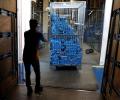
The companies have asked for digital curfew passes as e-retailers feel if more lockdowns are ordered after April 14, it is extremely difficult and time-consuming process to acquire the passes from local authorities.

For now, Bounce, Shuttl, Fab Hotels, Instamojo, Zomato, Curefit, and HealthifyMe, among others, are going for salary deductions. Most of the consumer internet start-ups, besides those who are in the grocery delivery, education tech, and video conferencing business, would ultimately lay-off people and cut back salaries.

Thanks to technological support provided by BlinkIN, a Bengaluru-based intelligent visual-assistance company, engineers in Wuhan were able to remotely install air ventilation systems in two hospitals in Wuhan, the epicentre of the coronavirus pandemic, reports Peerzada Abrar.

However, many of these firms were facing an uphill task of convincing the people on the ground to return to work, as many are apprehensive of their safety.

There is a lot of police action on the ground and even inter-state movement has been stopped, because of which deliveries of essential items via platforms, such as Flipkart, Amazon, Grofers, and Milkbasket, aren't happening. Food-delivery firms -- Swiggy and Zomato -- are facing similar challenges, according to the sources.

According to a survey by community platform LocalCircles, early-stage start-ups, funding dependent start-ups and many small businesses will soon be fighting for survival as the spurt in coronavirus cases hits them hard.

E-commerce companies are seeing an increase in demand for products such as fresh fruits and vegetables, milk, flour, rice, and lentils, and personal hygiene items like sanitisers and soaps and household cleaning products. Other products include instant noodles, baby food and Ayurvedic items. "There is even a huge spike in pet food," said a person.

After a gruelling 24 hours, the PhonePe team has fully restored UPI on the payment platform. The app is up and running again with ICICI Bank as its new partner with all payment instruments enabled.
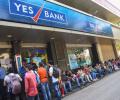
Assuming the private bank issues 20 billion shares at Rs 10 apiece (with face value of Rs 2 each), the total capital raise will be Rs 20,000 crore. And for the 49 per cent stake, SBI will need to put in about Rs 10,000 crore.

The Bengaluru-based firm competes with US rival Uber whose lukewarm IPO last year has contributed to the lag in valuation trend among the unicorns across the Indian start-up ecosystem.

Bank credit growth declined to 8.5 per cent in January from 13.5 per cent in the year-ago period.

The Hyderabad-born Nadella says it's not the AI engine, but the teams that build it as well as the algorithms to make it intelligent have to be diverse and inclusive, so that the solutions they build do not show up any sort of 'unconscious bias' that they may have.

The case may drag for a few years, experts say, as CAIT and DVM have said they will appeal against the interim relief granted to Amazon.

Major shareholder Kinnevik, a Swedish investment firm, devalued Quikr by 45%, referring to the exaggerated revenue resulting from fraudulent transactions that rocked the company. Quikr is now valued at about $577 million.

Amendment to the Act, sovereign guarantees, investment portfolio, realty holdings, and governance issues to shape valuation.
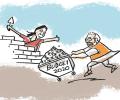
Apart from making your purchases on these platforms expensive, it will also mean sellers will have to face the brunt of reduced cash flows amid already low margins for some. Experts said the proposal, which will take effect on April 1, 2020, and will be inserted as a new section in the Income Tax Act, is expected to affect the working capital of e-commerce companies and reduce cash flows for e-sellers.
 © 2026 Rediff.com - Investor Information - Advertise with us - Disclaimer - Privacy Policy - Sitemap - Feedback - About us - Terms of use - Grievances